

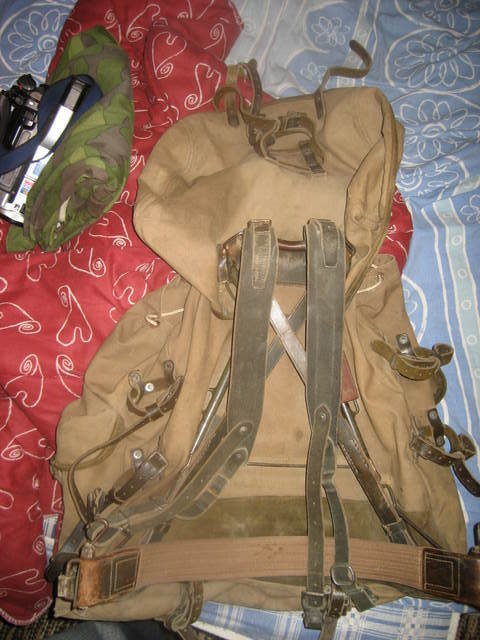
Note the improved load-bearing and support design – waistband, criss-cross straps on the back helping to support the load, metal frame which assisted in keeping the load off the back, leather straps on the sides and top for fastening external items to the rucksack easily. This was a vast improvement over the earlier models. In late 1939, manufacturing of this rucksack had been underway for only just over a year and numbers in stock were limited. Large numbers (well over two hundred thousand) would be manufactured and issued over the course of the Winter War and by 1943, this rucksack would be the standard issue to all Maavoimat soldiers – largely made possible by the large shipments of canvas and leather dispatched from Australia.
Note the improved load-bearing and support design – waistband, criss-cross straps on the back helping to support the load, metal frame which assisted in keeping the load off the back, leather straps on the sides and top for fastening external items to the rucksack easily. This was a vast improvement over the earlier models. In late 1939, manufacturing of this rucksack had been underway for only just over a year and numbers in stock were limited. Large numbers (well over two hundred thousand) would be manufactured and issued over the course of the Winter War and by 1943, this rucksack would be the standard issue to all Maavoimat soldiers – largely made possible by the large shipments of canvas and leather dispatched from Australia.